
You are currently browsing the monthly archive for January 2013.
> Posted by Paul Breloff, Managing Director, Accion Venture Lab
 The following post was originally published on the CGAP Blog.
In my last post, we talked about the potential for start-ups to shake things up in the financial inclusion space. But where’s the real opportunity today? At Venture Lab, we’ve got our eye on a number of trends for 2013.
First, mobile. There’s no denying the increasing ubiquity of mobile phones – over 4 billion in the developing world and counting – and we’re excited to explore the ways that mobile phones provide a channel to reach people with financial services. Our financial inclusion community has long focused on the growth of Kenya’s M-PESA, and no doubt, with over 16 million customers and 80 percent of the nation’s population having used it last year, it’s an iconic story in a sector thirsty for scaled success stories. Hopefully, markets like Pakistan, Tanzania, and Mexico won’t be far behind.
But there are other ways mobile can enable more widespread access to financial services. Take Coda Payments, for example, one of our first investments working in Southeast Asia. Coda operates a payments processing platform that connects with mobile network operators’ (MNO) billing systems and enables customers to purchase digital goods with a straightforward deduction against prepaid airtime. Think apps, e-content, information services, insurance premiums, and more.
> Posted by Alice Allan, Head of Advocacy, CARE International UK

The Financial Inclusion 2020 campaign at the Center for Financial Inclusion at Accion is building a movement toward full financial inclusion by 2020. Accordingly, this blog series will spotlight financial inclusion efforts around the globe, share insights coming out of the creation of a roadmap to full financial inclusion, and highlight findings from research on the “invisible market.”
Today marks the start of an important meeting in Monrovia, Liberia, where the UN High Level Panel will look at what might replace the current Millennium Development Goals (MDGs) when they expire in 2015. With a focus on economic transformation, the panel hopes that any future framework to reduce poverty includes increasing “jobs and growth,” and “tackling inequality.”
Those of us focused on financial inclusion believe increased access to finance can help achieve these admirable aims. But would the UN High Level Panel agree?
Last week the Banking on Change partnership between Barclays, CARE International, and Plan UK produced Banking on Change: Breaking the Barriers to Financial Inclusion, a report which, amongst other things, makes the case compellingly enough that we believe the UN High Level Panel should take note.
> Posted by Jeffrey Riecke, Communications Assistant, CFI
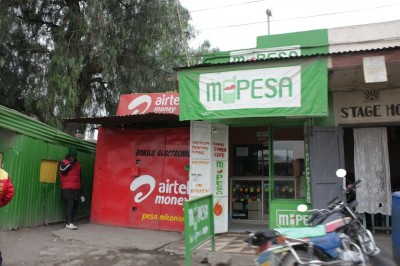 Talk of mobile money is everywhere these days. New technologies and services, new business models, new markets, new industry forecasts. There’s been so much news lately that I felt compelled to spend a bit of time sorting out what’s been happening with mobile… before it speeds away again. Here’s a quick cull of what I found.
A few weeks ago both Peru and Ethiopia opened up their doors to mobile money services. Peruvian President Ollanta Humala signed legislation permitting the flexible banking platforms in the country, as did Ethiopia’s government. Both country developments are big opportunities for financial inclusion. Ninety-five percent of Peruvian districts have access to telephone service, while 65 percent of Peruvian districts lack access to formal financial services. Eighty percent of Peruvians own a mobile phone, yet only 28 percent of Peruvian adults have a bank account at a formal financial institution. Ethiopia – the second largest country in Africa by population – has one of the lowest financial inclusion rates. Its rural population makes up about 82 percent of the country’s total, and only 1 percent of its rural population has a bank account.
Mobile money adoption in both Uganda and Tanzania is moving onto the kind of fast-paced trajectory previously seen only with Kenya’s M-PESA, according to recent analysis from CGAP. Current mobile money penetration in urban Uganda and urban Tanzania is 51 percent and 65 percent, respectively. Kenya’s in 2008 was 44 percent.
> Posted by Center Staff
We’re excited to pass on the news that today marks the official launch of the Financial Inclusion 2020 campaign, with the generous support of Citi Foundation and Visa, Inc. Readers of this blog are no doubt already aware of Financial Inclusion 2020’s ongoing work to advance worldwide financial inclusion by bringing together a diverse set of stakeholders to develop a Roadmap to Inclusion. Today’s announcement reflects the high-level support that the campaign is generating:
Pamela Flaherty, President & CEO of the Citi Foundation and Director of Corporate Citizenship at Citi, said, “Expanding financial inclusion is both a development imperative for underserved communities and a forward-thinking approach to unlocking the economic potential of new markets. Citi is pleased to take a leadership role in joining the Center for Financial Inclusion at Accion and Visa to convene longtime partners and invite new stakeholders to work together to create universal access to quality financial services and drive sustained economic growth.”
Bill Gajda, Head of Global Mobile Product, Visa, said, “We know full financial inclusion is achievable if the private sector, governments and civil society work together. Innovations such as mobile money will allow us to reach everyone, everywhere with financial services. Achieving full financial inclusion will not only improve the lives of billions of people, it will drive economic growth, accelerate women’s empowerment and remove a major obstacle in the fight against global poverty. The time is right for this initiative, and Visa is proud to join with Citi and the Center for Financial Inclusion in support of FI2020.”
> Posted by Mary Ellen Iskenderian and Rupert Scofield, Co-Chairs of the Microfinance CEO Working Group
 As co-chairs of the Microfinance CEO Working Group, we are pleased to share with you a joint statement from the Working Group in support of the recently announced Smart Campaign Client Protection Certification Program. Certification will offer public recognition for institutions that meet adequate standards of care in appropriately protecting microfinance clients, as verified by an independent evaluation. It marks a clear step forward in ensuring the microfinance industry puts the treatment of its clients first.
Since we began meeting in early 2011, many of the Working Group’s discussions have focused on the fundamental question of what the microfinance industry requires to flourish in the future. We believe that client protection is central to the answer. It is common sense – and good business practice – that a fair and respectful relationship with clients is required to develop trust, reduce risk, and serve them appropriately. As leaders of FINCA and Women’s World Banking, we are especially concerned with the fair treatment of women clients, the traditional backbone of the microfinance industry, who are often more vulnerable to exploitation.
> Posted by Elisabeth Rhyne, Managing Director, CFI
 The following post was originally published on the Huffington Post Business Blog.
The global microfinance industry realized a significant and long-awaited goal this week with the introduction of Client Protection Certification as promoted by the Smart Campaign. With certification, lenders and banks for low-income people will be able to demonstrate — on the basis of an on-site, third-party evaluation — that they take adequate care to protect their clients.
As one of the founders of the Smart Campaign, my high hopes are that Client Protection Certification will become a kind of Fair Trade mark for the microfinance industry. If established as we envision, donors, investors, regulators, and even clients will check the certification registry before they invest in or bank with microfinance institutions, choosing the ones that meet the standards. This in turn will create positive incentives for institutions to improve, ultimately leading to safer, more respectful services for the low income clients microfinance reaches.
> Posted by the Smart Campaign
 The Smart Campaign is proud to announce that today marks the official program launch of Client Protection Certification! Managed by the Smart Campaign, the Client Protection Certification program gives providers of financial services for low-income people the ability to demonstrate that they take adequate care to protect their clients.
Certification – created both for and by the industry – represents an important milestone in the evolution of microfinance as a uniquely client-focused portion of the global financial sector. “There has been widespread demand for mechanisms that protect microfinance clients. This is the first program that verifies client protection publicly,” said Smart Campaign Managing Director Isabelle Barres.
The Client Protection Certification Program contains a rigorous set of standards against which institutions are evaluated. The standards address the client protection elements inherent to receiving fair treatment while doing business with a financial institution. You might remember our covering some of these standards and indicators in our recent Straight Talk on Client Protection blog series.
> Posted by Merene Botsio and Sonja E. Kelly, Financial Inclusion 2020 Project Coordinator and Fellow, CFI
The Financial Inclusion 2020 campaign at the Center for Financial Inclusion at Accion is building a movement toward full financial inclusion by 2020. Accordingly, this blog series will spotlight financial inclusion efforts around the globe, share insights coming out of the creation of a roadmap to full financial inclusion, and highlight findings from research on the “invisible market.”
People across the world are four times more likely to recognize the Coca-Cola logo than to have saved money in a formal financial institution in the past year. Almost everyone—94 percent of adults in the world—recognizes the Coca-Cola logo, whereas only 23 percent of people have saved at a formal financial institution. When we bring big statistics down to our everyday lives, it often becomes easier to understand their magnitude. Here are some other surprising figures that emerge when we compare the Global Findex numbers on financial services usage to other figures.* Read the rest of this entry »
> Posted by Josh Goldstein aka Mr. Provocative
The elephant in the room of vulnerable minorities that continue to be excluded in large numbers from microfinance services is the globe’s second largest population after women: men. The vulnerability of men is often overlooked, due to their historic domination of women and their control of wealth in most societies throughout recorded history. Of course for every wealthy landowner or merchant, there were many slaves, landless laborers, and indentured servants, who controlled none of the world’s wealth and were lucky if they scratched out a living.
When microcredit first gained traction and credibility as a poverty alleviation strategy in the seventies, creating self-employment opportunities for women in the informal sector was central to its mission. Organizations like Women’s World Banking (birthed at the UN’s World Conference on Women in 1975) and Pro Mujer (1990) embodied this outreach strategy. There were very sound reasons to focus on women, who are and remain the poorest of the poor. And this emphasis reflected the zeitgeist of the time, as many of the early leaders of microfinance came of age in the women’s movement. Theirs was a struggle for equal rights and equal pay in societies that were patriarchal and discriminatory. It was a logical next step to bring this message of women’s rights to international development work.
 Today the Center is taking a break from its regular posting to celebrate Martin Luther King Day and the United States Presidential Inauguration.
For an extra look at both holidays, check out a new post from The Learning Network Blog of The New York Times. The post includes historic articles, photos, and an interactive build-your-own inaugural address game.

 Facebook
 Twitter

Recent Comments