
You are currently browsing the tag archive for the ‘Mobile Banking’ tag.
> Posted by Jeffrey Riecke, Communications Assistant, CFI
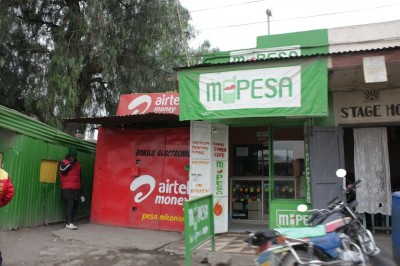 Talk of mobile money is everywhere these days. New technologies and services, new business models, new markets, new industry forecasts. There’s been so much news lately that I felt compelled to spend a bit of time sorting out what’s been happening with mobile… before it speeds away again. Here’s a quick cull of what I found.
A few weeks ago both Peru and Ethiopia opened up their doors to mobile money services. Peruvian President Ollanta Humala signed legislation permitting the flexible banking platforms in the country, as did Ethiopia’s government. Both country developments are big opportunities for financial inclusion. Ninety-five percent of Peruvian districts have access to telephone service, while 65 percent of Peruvian districts lack access to formal financial services. Eighty percent of Peruvians own a mobile phone, yet only 28 percent of Peruvian adults have a bank account at a formal financial institution. Ethiopia – the second largest country in Africa by population – has one of the lowest financial inclusion rates. Its rural population makes up about 82 percent of the country’s total, and only 1 percent of its rural population has a bank account.
Mobile money adoption in both Uganda and Tanzania is moving onto the kind of fast-paced trajectory previously seen only with Kenya’s M-PESA, according to recent analysis from CGAP. Current mobile money penetration in urban Uganda and urban Tanzania is 51 percent and 65 percent, respectively. Kenya’s in 2008 was 44 percent.
> Posted by Jeffrey Riecke, Communications Assistant, CFI
 The stage is set for large-scale financial inclusion expansion in Uganda, including amongst those at the base of the pyramid, according to a new report by InterMedia. Compiling the results of over 3,000 household surveys, Mobile Money in Uganda: Use, Barriers and Opportunities examines the uptake, use and market potential of mobile money services throughout the African country.
In order to participate in mobile money banking services, the only hardware an individual needs is an active SIM card – a data storage card used in mobile devices. They don’t even need their own phone, if they can use someone else’s phone when needed. The report finds that the accessibility of such hardware is widespread. Of the surveyed households, roughly two-thirds had at least one person who owned a mobile phone and an active SIM card. What’s more, over half of the country’s unbanked households and households living below the poverty line were deemed able to access a mobile phone and own a SIM card.
> Posted by Jeffrey Riecke, Communications Assistant, CFI
 Iran’s currency value fell last week, decreasing from 24,000 to 26,400 rials, in relation to the U.S. dollar. Unfortunately, few Iranians had this important information. Mobile phones, websites, and store-front displays all experienced some form of censorship. In the case of mobile phones, messages containing the word “dollar,” in either Farsi or English, were not delivered. On January 10 this year, similar censoring of phone messages occurred in coincidence with a decrease in the rial’s value.
> Posted by Ignacio Mas
 Giving personal credit is about judging people. Banks have established information standards about customers, designed to make the judging process routine. How long have you lived at a given fixed address? What is your level of education and profession? How much salary do you earn? What is your history of past debts? etc.
The problem is that this standard information set is not at all standard for the informal majority in developing countries. People may not have a fixed address, they are likely to be jacks-of-all-trades, no one guarantees them a wage, and prior borrowing and repayments have left no trace.
There is much talk about using online social networks to create a new systematic profile for customers whose data is now invisible to banks (such as Lenddo). The deal seems to be: reveal more to the lender about what you do, how you spend your time, what your interests are, who your friends are, and it will be better able to judge you. With today’s computing machines, the information collected from people can be a lot more bitty and diverse, and the code will crunch it into a standard profile. Powerful stuff: now, pretty much any information can be thrown into the judging machine.
Read the rest of this entry »
>Posted by Ignacio Mas
A review of Money Real Quick: The Story of M-PESA by Tonny K. Omwansa and Nicholas P. Sullivan
When it comes to mobile payments, Kenya has become a global innovator. Almost three-quarters of the adult population knows how to fiddle with a small keyboard in order to send money to someone else or check their balance. They haven’t been seduced by Jobsian gadgetry (any phone will do), but rather by the sheer simplicity and convenience of the M-PESA service. Anywhere you go you find stores offering to help you with the bothersome business of getting cash into or out of your phone. It’s practically doorstep service. Indeed, the most striking thing about M-PESA is how visible it is.
In their new book, Money Real Quick: The Story of M-PESA, Omwansa and Sullivan have done an excellent job of consolidating all that we know about M-PESA today, following every nuance in its development and every tentacle in its growing reach. This book will become not only the classic story but also the reference for all things M-PESA. Read the rest of this entry »
 > Posted by Center Staff
The following is an excerpt from a private email conversation between two CFI staff members, Sergio Guzman (based in Washington, DC) and Leah Wardle (living abroad in Nairobi, Kenya).
Sergio writes:
Hey Leah —
I just read this article, which was tweeted by Tilman Ehrbeck at CGAP, about mobile money contributing to inflation in Kenya. The article claims that MPesa – especially since it has started allowing people to store money (creating something that looks an awful lot like a bank account) –causes Kenyans to move money around so fast that it sparks inflation. Read the rest of this entry »
> Posted by Michael Quesnell, Senior Manager, Sustainability, Nokia
 This post is part of the Center for Financial Inclusion’s Expert Exchange: Building A Movement Toward Financial Inclusion by 2020, cultivating conversation around the goal of reaching full financial inclusion by 2020. For further questions about this series, write to , Fellow, Center for Financial Inclusion at Accion.
It was just a year ago that I was sitting on the floor of a tiny local community building in a small village about 90 minutes outside of Ahmedabad, India listening to 30 women tell me what they wanted from mobile technology. These women, all leaders with the Self-Employed Women’s Association (SEWA), were on their game despite the fact that my agenda was to get insights into a financial literacy application I was helping design. They were shrewd, insightful, and knew exactly what they wanted and needed to improve their important rural work in microfinance and membership services…I was about to get schooled. Read the rest of this entry »
>Posted by Charlotte Connors
Amitabh Saxena, author of ACCION’s “InSight #27; Accelerating Financial Inclusion through Innovative Channels: 10 Obstacles for MFIs Launching Alternative Channels—and What Can Be Done,” was recently featured as a guest blogger in two exciting forums, where he discusses some implications of his recently completed research:
CGAP Technology Blog: “Is microfinance still relevant in branchless banking?”
Mobile Money for the Unbanked: “Why and How to Engage Microfinance Institutions for your Mobile Money Deployment”
Download your copy of his paper today.
> Posted by Yilan Hu
 I’m a Paganucci Fellow at Tuck School of Business this summer. First let me introduce myself. My name is Yilan Hu, and I grew up in China where my parents still live. Prior to coming to Dartmouth, I studied for five years in Singapore on a scholarship. I’m currently a rising senior with a double major in Economics and Mathematics at Dartmouth. I have developed a keen interest in development work, partly intrigued by China’s rapid economic growth and partly inspired by Singapore’s success story.
The Paganucci Fellows have been working on developing scorecards of the level of financial inclusion present in several countries. I, for example, worked extensively on the scorecard for the Philippines. When I first started working on the Philippines, I was told that it has been a pioneer in mobile banking. Admittedly, mobile banking was just a catchy phrase that meant little to me back then. However, through the research I’ve done, I’ve come to truly appreciate the huge potential of mobile banking as a vehicle to expand financial access. I’m found that mobile banking can significantly alter the outlook of this country’s basic financial products, such as credit, savings, and payments. For example, the cost of inward international remittances to the Philippines is as low as 1% of the transfer amount via mobile channels compared to about 5% through regular non-bank remittance agencies.
We also look at the concentration of bank branches and POS in countries to measure physical accessibility. While the Philippines does not have high bank concentration Read the rest of this entry »

 Facebook
 Twitter

Recent Comments